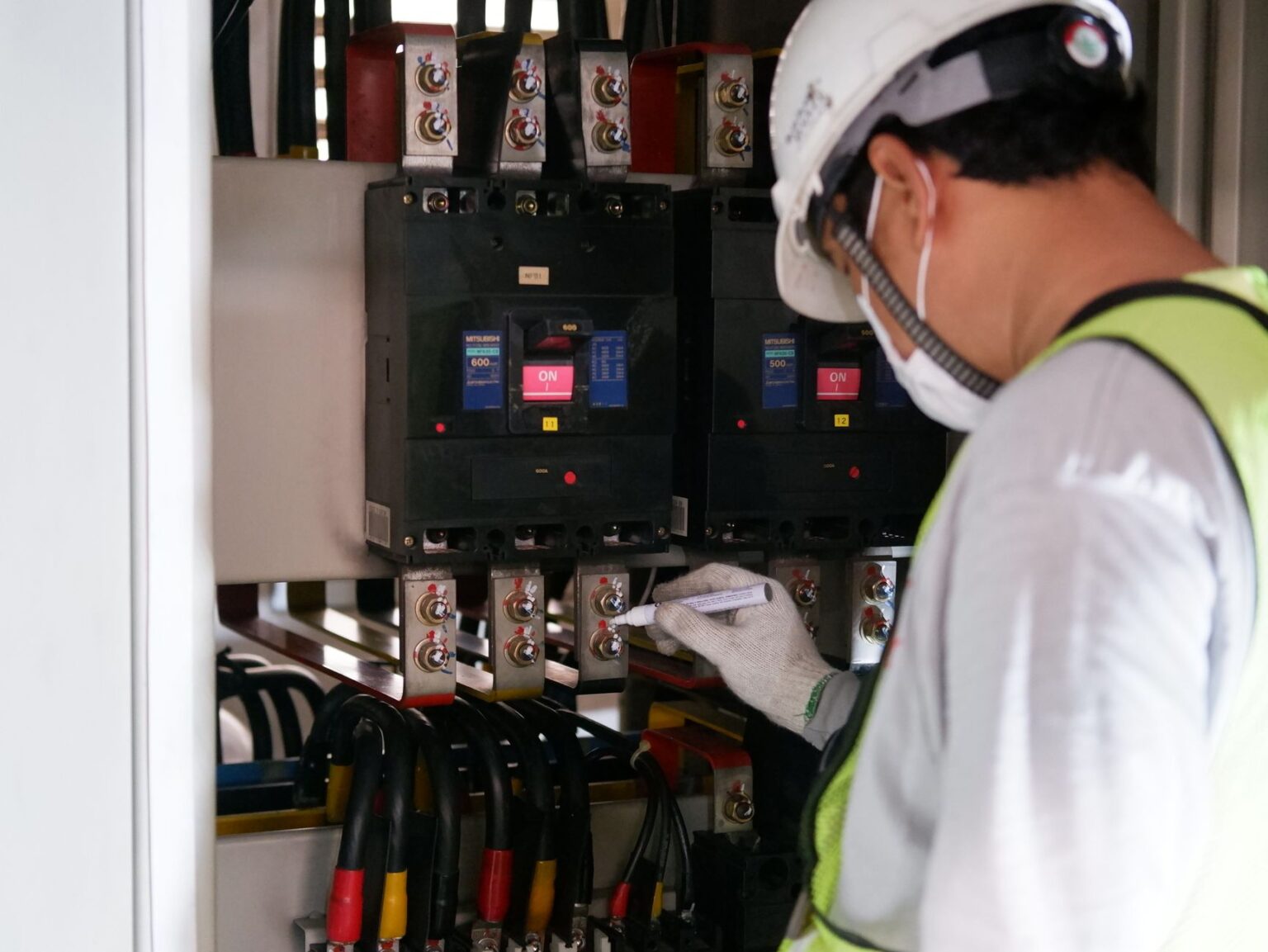
Your breaker size, not your charger, decides how fast your Tesla charges at home.
If you’ve installed a Tesla Wall Connector and your charging speed seems lower than you expected, the Wall Connector usually isn’t the bottleneck — your circuit breaker is.
Why the breaker, not the charger, sets the limit
EV charging is treated as a continuous load under the National Electrical Code, meaning it’s expected to draw current steadily for three hours or more. The code requires continuous loads to use no more than 80% of a circuit breaker’s rating, so a breaker that’s rated for 60 amps can only be used to deliver 48 amps of continuous charging current — the other 20% is headroom, not usable power. This is the same 80% continuous-load rule that applies to other high-draw circuits in your home, not something specific to EVs.
That’s why the same Wall Connector hardware can charge at very different speeds in different homes: the charger itself supports up to 48 amps, but what it’s allowed to actually deliver depends on the breaker your electrician installs.
What breaker size gets you what speed
- 60-amp breaker → up to 48 amps of continuous charging (Wall Connector’s maximum)
- 50-amp breaker → up to 40 amps
- 40-amp breaker → up to 32 amps
- 30-amp breaker → up to 24 amps
At 240V, a common rule of thumb is roughly 1 mile of range added per hour for each amp of continuous charging current, so the jump from a 30-amp to a 60-amp breaker roughly doubles your overnight charging speed (about 24 miles/hour vs. about 48 miles/hour). Tesla’s own installation guidance lets an electrician configure the Wall Connector to match whatever breaker size your home’s panel can actually support, down to as little as 15 amps, which is why it’s worth asking your electrician which size they’re installing rather than assuming you’re getting the full 48 amps by default.
What this means before you install one
If overnight charging speed matters to you — for example, you drive a lot of miles in a day and need a full charge in a short window — ask your electrician what breaker size your panel can support before installation, not after. Upgrading from a 40-amp to a 60-amp circuit later usually means reopening the wall and possibly upgrading your panel, which costs more than specifying the right breaker the first time. If your panel genuinely can’t support 60 amps without a costly upgrade, a lower amperage is still a major improvement over a standard wall outlet, and the Wall Connector will simply draw less and charge more slowly, not fail to work.
Photo by Annas Zakaria.