Tesla’s Mobile Connector and NEMA adapters: which one you actually need at home.
Every new Tesla comes with a Mobile Connector in the frunk: a 20-foot charging cable bundled with two adapters, a NEMA 5-15 for a standard 120-volt household outlet and a NEMA 14-50 for a 240-volt, 50-amp outlet, plus a bag to keep it organized. For most new owners, the question isn’t which charger to buy — it’s which of the plugs already in your garage the Mobile Connector can use, and whether that’s fast enough.
The NEMA 5-15 is the easy one: it goes into any ordinary wall outlet, no electrician required. Tesla’s own numbers put that at roughly 3 to 6 miles of range per hour depending on the model — enough to fully recharge overnight if you drive a normal daily commute, too slow to matter much if you show up near empty.
The NEMA 14-50 is the one that changes the math. Plugged into a 240-volt outlet — the same type a stove or an RV hookup uses — it delivers roughly 23 to 30 miles of range per hour, which covers a full charge overnight even after a long day of driving. If your garage or driveway already has a 14-50 outlet, or an electrician can add one, you may never need to buy a dedicated Wall Connector at all.
Outside those two, Tesla sells separate adapters — NEMA 6-50, 10-30, and 14-30 — for owners whose homes have a different 240-volt outlet already installed, like an older dryer outlet, rather than paying to add a 14-50. One thing worth checking before buying a used or third-party adapter: Tesla issued a voluntary recall on some 14-30, 10-30, and 6-50 adapters years ago after overheating reports, and still publishes the affected part numbers on that page. It doesn’t apply to the 5-15 or 14-50 adapters bundled with a new Mobile Connector, but it’s a two-minute check if you’re buying an older or secondhand one.
If none of that matches what’s already installed, a hardwired Wall Connector is the alternative — faster and more convenient for daily use, but it requires a licensed electrician and its own circuit, which is a bigger upfront cost than an adapter that plugs into an outlet you already have. For most first-year owners, the Mobile Connector and whichever adapter matches an existing outlet is the cheaper starting point, with a Wall Connector as the upgrade once you know how much charging speed you actually need.
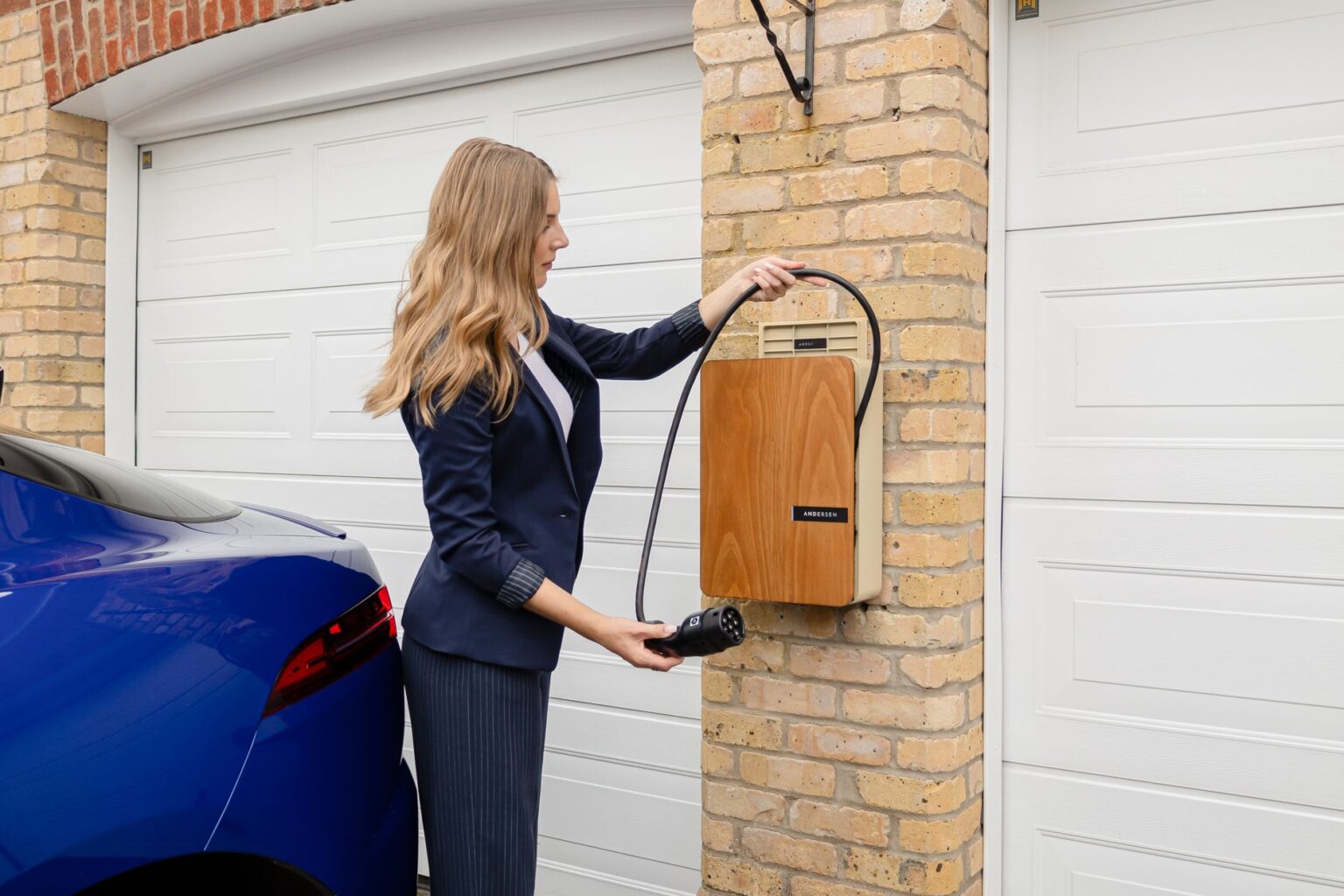
Photo by Andersen EV.