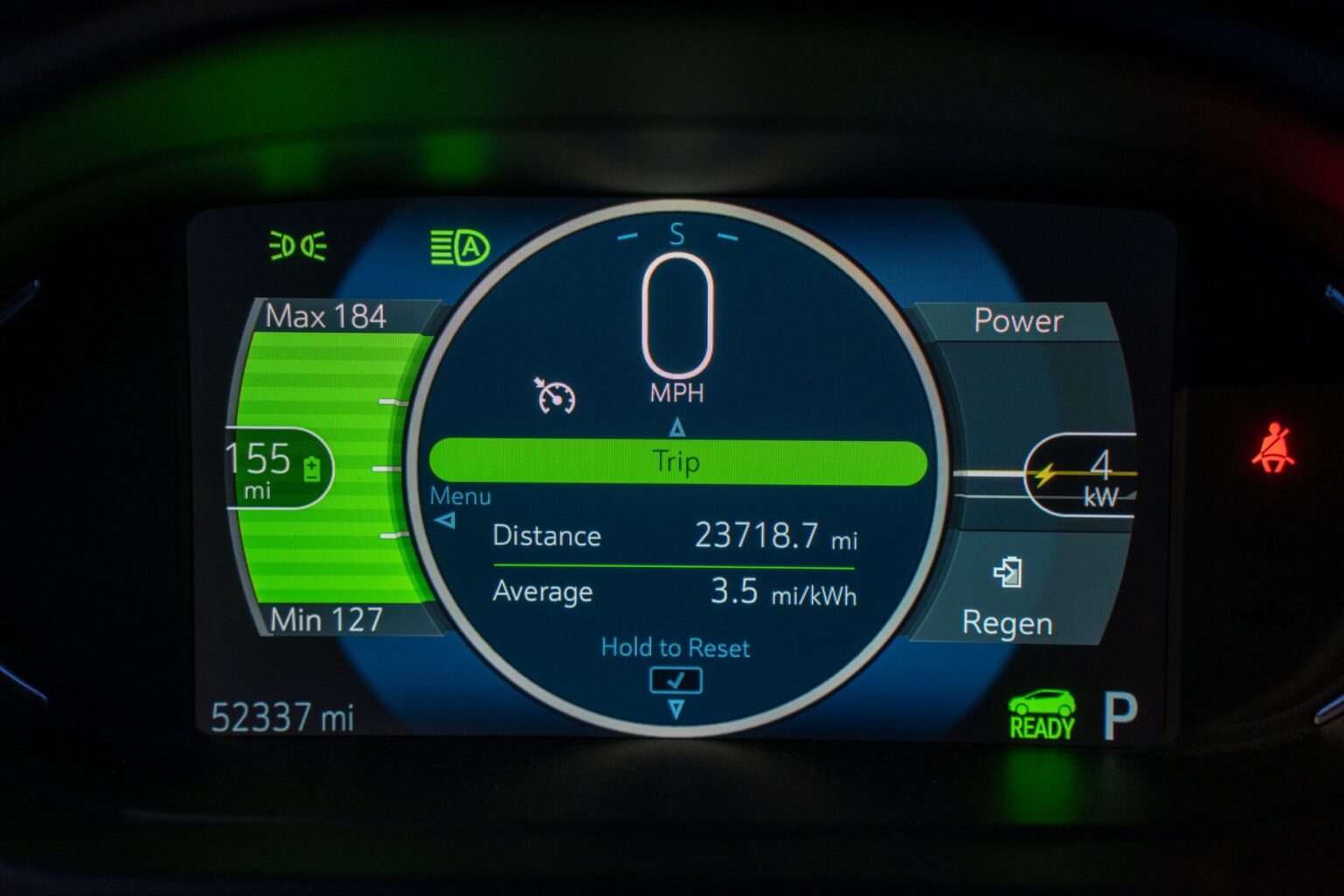
The range number on your Tesla’s window sticker isn’t a promise about your daily commute — it’s the result of a standardized lab test that every automaker has to run the same way. Understanding how that number is built explains why the miles on your dash rarely match it exactly.
The EPA doesn’t drive cars on public roads to rate them. Every figure comes from a dynamometer, essentially a treadmill for cars, run in a climate-controlled lab. Automakers combine results from an urban cycle that averages about 21 mph and mimics stop-and-go city driving, and a highway cycle that averages roughly 48 mph, according to GreenCars’ breakdown of the methodology. Those two results are blended (roughly 55% city, 45% highway), then multiplied by a 0.7 adjustment factor meant to account for real-world driving the lab test doesn’t fully capture.
Tesla, notably, tends to use the EPA’s optional five-cycle test rather than the simpler default. That version adds high-speed driving up to 80 mph, air conditioning use, and cold-temperature operation into the mix, which is part of why Tesla’s rated numbers have historically tracked closer to what owners actually see than some competitors’ ratings do.
Even so, a gap is normal. Consumer Reports’ real-world testing has found most EVs deliver somewhere between 85% and 95% of their EPA rating at sustained highway speeds, and broader road-test data shows real-world range running 10–25% below the sticker number in some conditions, particularly at high speed or in extreme temperatures, per Recharged’s guide to EPA range ratings.
A few things drive that gap in your Tesla specifically. Speed is the biggest one: aerodynamic drag rises sharply above about 65–70 mph, so a fast interstate cruise burns noticeably more energy per mile than city driving, where regenerative braking recovers energy the lab’s stop-and-go cycle rewards. Cold weather hurts range too, both because the battery is less efficient when cold and because cabin heating draws power a gas car gets for free from its engine. Heavy use of air conditioning, steep grades, and a fully loaded car (passengers, cargo, a roof box) all chip away at the total as well.
None of that means the rated number is wrong — it’s a consistent benchmark for comparing one EV to another, which is exactly what it’s designed for. It’s just not a guarantee for any specific drive. The most useful habit is to treat your Tesla’s own trip planner and real-time consumption display, both of which account for your actual speed, temperature, and driving style, as the number to trust for a specific trip, and treat the EPA rating as the number to trust when comparing cars.
Photo by Tom Fisk.
Photo by Tom Fisk.
Tags