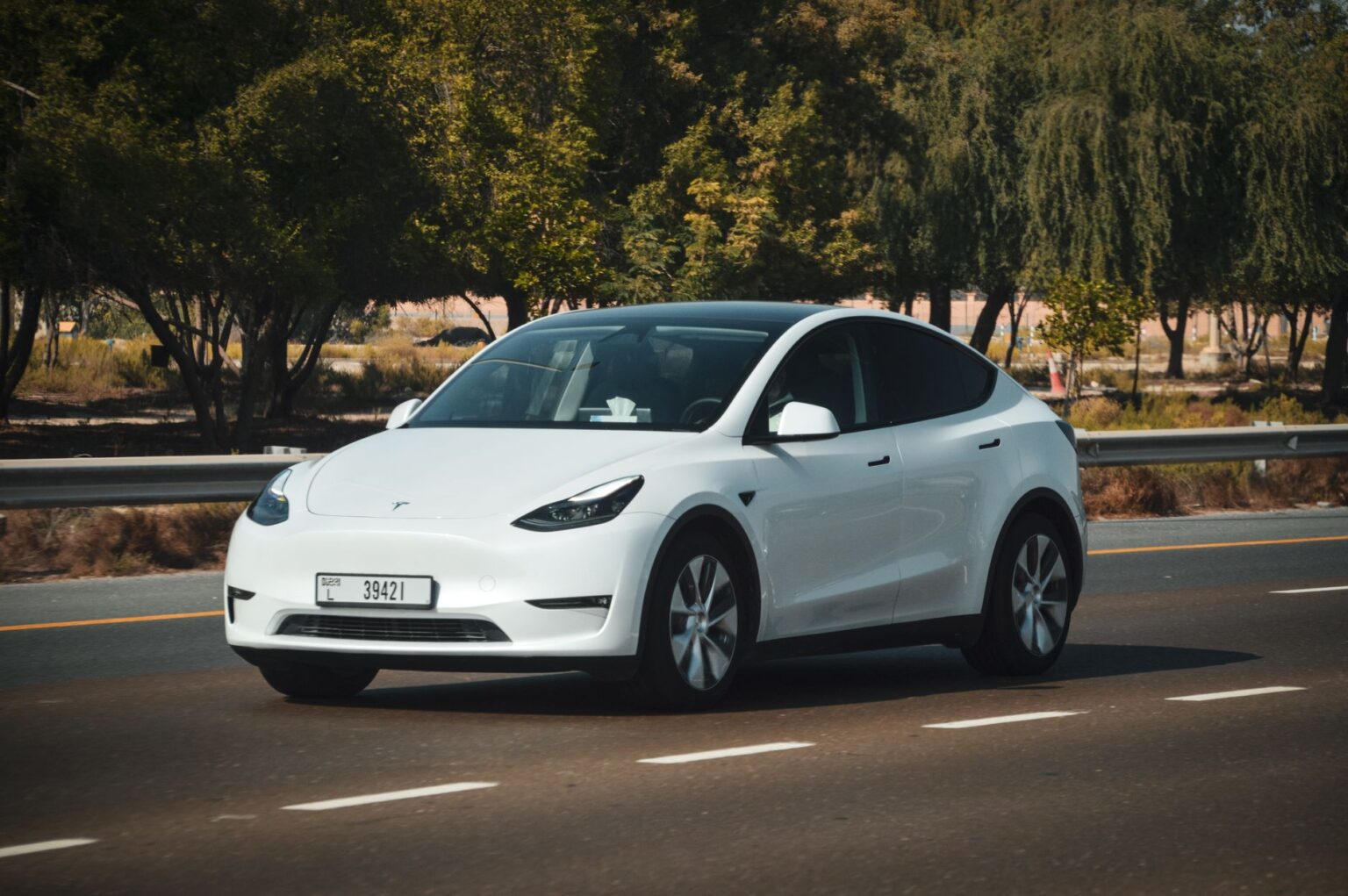
Summer is peak road-trip season, and a Tesla makes long-distance driving easier than most people expect, as long as you understand two things going in: how the car plans your charging stops, and how much range you actually get once you’re holding highway speed. Here’s what a first-time Tesla road-tripper needs to know before pulling out of the driveway.
Let the car plan your route
You don’t need a third-party app to plan a Tesla road trip. Type your destination into the touchscreen, and Navigation identifies the fastest route along with the most convenient places to charge along the way. If your trip is long enough to require a charge, Trip Planner automatically builds Supercharger stops into your turn-by-turn directions, showing a recommended charging time at each stop and how much battery you’ll have when you arrive. The estimates update as you drive, accounting for real-time traffic, weather, and elevation change, and the car starts warming or cooling the battery before you reach a Supercharger so it’s ready to accept a faster charge the moment you plug in.
You’re not locked into whatever the car suggests. You can remove a Supercharger stop from your route, and navigation also shows charging options at hotels, restaurants, and shopping centers if you’d rather charge somewhere with more to do while you wait, according to Tesla’s own travel-planning guidance.
How big the Supercharger network is right now
The scale of the network is a big reason Tesla road trips have gotten less stressful over the years. Tesla says it operates more than 80,000 Superchargers worldwide, and tracking of Tesla’s own quarterly data puts the total at roughly 79,900 charging stalls across more than 8,460 stations globally as of the first quarter of 2026, with U.S. locations alone topping 3,000 stations. The network grew about 19% year over year in that period, so new stations keep filling in gaps along popular routes. In practice, most interstates in the U.S. now have Superchargers spaced closely enough that you’re rarely far from one, even in less-traveled corridors.
How fast you can actually charge
Charging speed depends on your car, the specific stall, and how full your battery already is. By Tesla’s own figures, a Model 3 can add up to 175 miles of range in 15 minutes, a Model Y up to 162 miles, and a Model S up to 200 miles, under ideal conditions. Newer “V4” Supercharger stalls can push more power to vehicles built for it, up to 325 kilowatts as of January 2025, but current Model 3, Model Y, Model S, and Model X vehicles still cap out around 250 kW because of how their battery packs are built, so plugging into a newer stall won’t necessarily speed up your specific car.
Charging also isn’t a flat rate the whole way. Your car pulls power fastest when the battery is low, and Tesla may automatically cap your charge limit at 80% at busy Supercharger locations to reduce congestion. That’s part of why the practical road-trip strategy is to charge to around 80% and get back on the road, rather than waiting around for a full battery.
Your real range on the highway
The range number on your car’s window sticker is an EPA combined estimate, and it leans toward city driving, where EVs are most efficient. Sustained highway speed tells a different story. Tesla’s own guidance notes that doubling your speed can require up to four times as much energy per mile, because aerodynamic drag rises sharply as you go faster. Independent testing backs this up: a widely cited 2023 study built on Car and Driver’s steady 75-mph highway test found the average EV fell about 12.5% short of its EPA-rated range, while gasoline vehicles in the same test actually beat their window-sticker numbers by about 4%.
The takeaway: don’t plan a trip assuming you’ll get the full EPA number between charges. Budget for meaningfully less once you’re holding 75-80 mph on the interstate, and let Trip Planner’s live, in-car estimates, which account for your actual speed, elevation, and weather, guide your stops rather than the spec-sheet figure.
How to cut down on charging stops and time
A few habits make a real difference in total trip time:
- Check tire pressure before you leave. Underinflated tires increase rolling resistance and hurt range, according to Tesla’s range guidance.
- Take off roof racks or bike carriers you’re not using. Anything that adds drag costs you range at highway speed, per the same Tesla guidance.
- Close the windows and keep cargo weight down for the same reason; both are on Tesla’s list of range-maximizing habits.
- Set regenerative braking to Standard to conserve range during deceleration, a setting Tesla specifically recommends for road trips.
- Charge to around 80%, not 100%, at Supercharger stops. Since Tesla’s own system already leans on 80% as a practical charge target at busy stations, treat it as your default too and get back on the road instead of topping off slowly.
- Navigate to the Supercharger instead of just typing in the address separately, so the car preconditions the battery and it’s warm and ready to accept a fast charge when you arrive.
- Watch the Energy app, not the range estimate, for a real-time read on how your speed and driving style affect consumption.
None of this requires special planning software or a lot of EV experience. Type in your destination, let Trip Planner build the route, budget for highway range that runs meaningfully below the window-sticker number, and treat each Supercharger stop as a 15-to-25-minute break rather than a full recharge. For most summer trips within a few hundred miles of home, that’s really all the planning a first-time Tesla road-tripper needs.
Photo by Saksham Vikram.