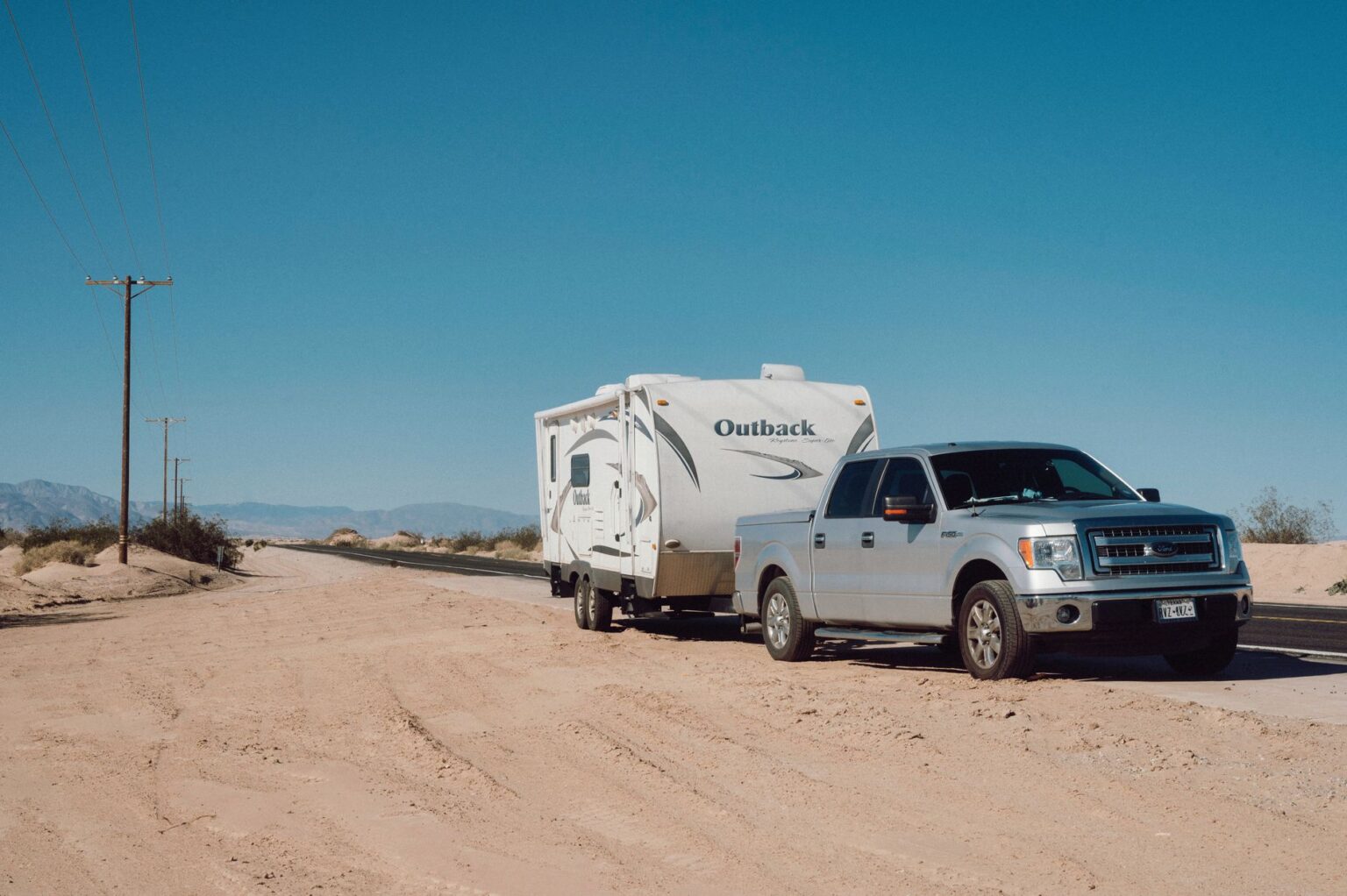
Towing cuts your Tesla’s range hard. Plan charging stops around it, not your dashboard estimate.
Your Tesla’s rated range assumes you’re not towing anything. Hook up a trailer and that number stops meaning much. Tesla’s own Model Y owner’s manual puts it plainly: “Towing a trailer increases vehicle weight and drag. As a result, driving range can decrease significantly.” The same language appears in the Model X manual.
How much range you actually lose depends heavily on the trailer’s shape and your speed, more than on weight alone. InsideEVs tested this directly: a tri-motor Cybertruck towing a roughly 7,000-lb Rivian R1T on a trailer, close to the truck’s towing limit, used 70 kWh of its 123-kWh pack over an 86-mile mixed-terrain loop. That works out to a 60% range cut versus the truck’s rated 320 miles, projecting out to roughly 149 miles on a full charge instead of 320. Half the battery was gone after just 49 miles.
What you can actually tow
Towing capacity varies a lot by model and even by wheel size. Per Tesla’s owner’s manuals and shop specs: a Model Y with the tow package is rated for 3,500 lbs. A Model X tops out at 5,000 lbs on 20″ wheels, but drops to 3,500 lbs if it’s wearing the 22″ wheel option. The Cybertruck’s dual- and tri-motor versions are rated up to 11,000 lbs; the single-motor version is limited to 7,500 lbs. None of those numbers tell you what your remaining range will look like once you’re actually pulling the load.
Trailer Mode changes your estimates, but not enough
Tesla’s Trip Planner does try to account for towing. According to the owner’s manual, “Trip Planner attempts to adjust estimates based on Trailer Mode, but actual energy consumption may vary,” and Tesla’s own guidance is to plan charging destinations accordingly rather than trust the adjusted number outright. Trailer Mode itself engages automatically when you plug in a trailer’s electrical connector while parked, or you can turn it on manually from Controls > Dynamics > Trailer Mode.
How to plan the actual trip
Treat any towing range estimate as optimistic. A few adjustments that matter more while towing than driving solo:
- Plan for roughly half your normal range between stops, not the number on the dash, especially at highway speeds where aerodynamic drag from the trailer does more damage than the trailer’s weight.
- Slow down. The gap between towing at 60 mph and 75 mph can be the difference between manageable range loss and a serious one.
- Check that your planned Supercharger stops have pull-through stalls or enough room to maneuver with a trailer attached — not every station does.
- Budget extra charging time. Towing raises energy consumption, so you’ll be charging more often and, at a given state of charge, potentially waiting on slower charging curves than an unloaded car sees.
None of this means towing with a Tesla is impractical. It means the dashboard number you’d trust on a normal drive isn’t the number to plan a towing trip around.
Photo by Alfo Medeiros.