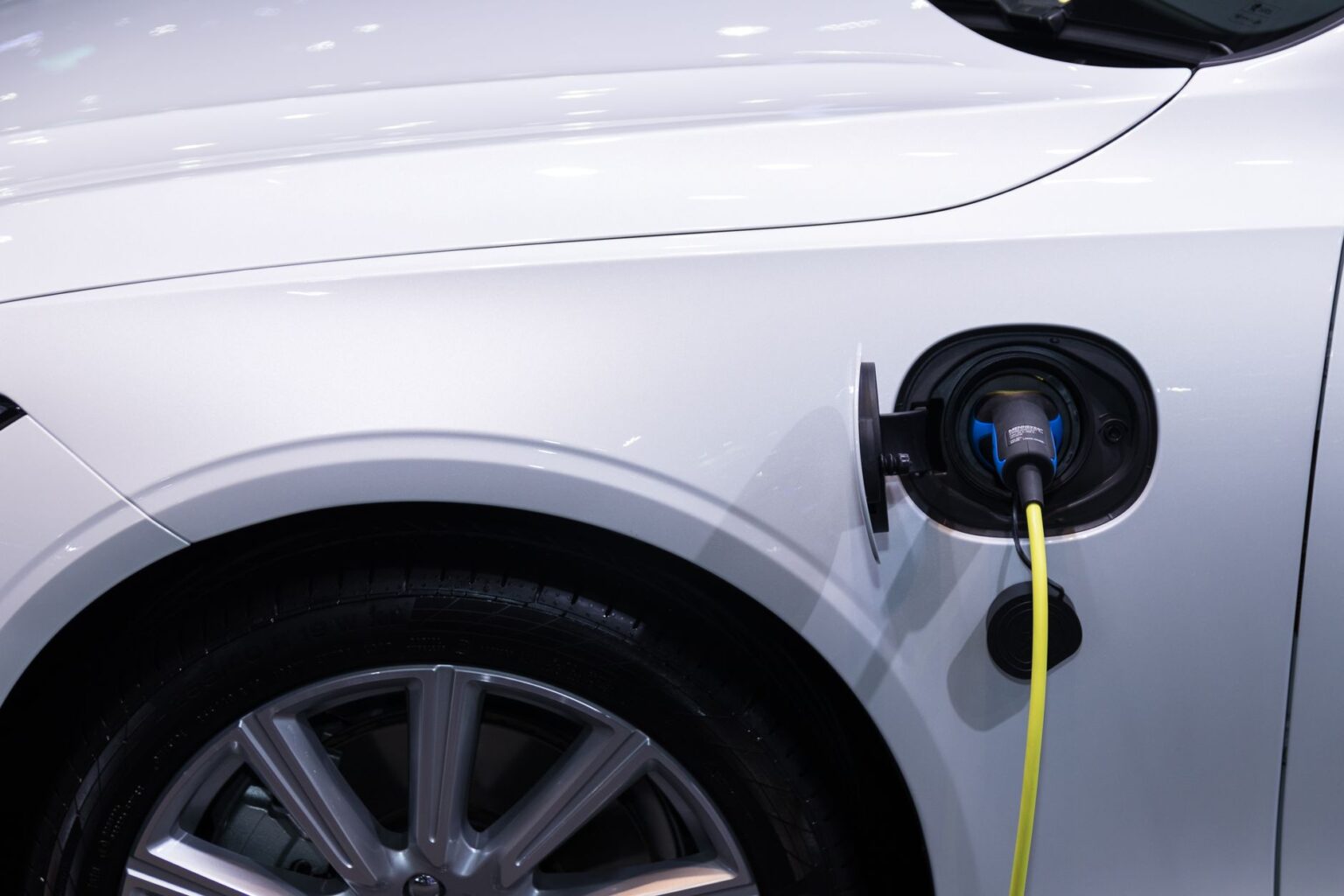
Search for Tesla accessories and you’ll find two different products sold under similar names: soft covers that snap over the charge port to keep out dust and rain, and small locks that clip onto the charging connector to stop someone from pulling it out. Before buying either, it helps to know what Tesla already builds into the car, and which problem — if any — is actually documented.
Tesla’s charge port is more protected than it looks. It sits behind a motorized door that opens and closes on its own, and the owner’s manual instructs drivers never to close the door by hand, since forcing it can damage the mechanism. More importantly, when you plug in with a Tesla connector — at a Supercharger or with your own Wall Connector or Mobile Connector — a latch engages and locks the cable in place once charging starts. Tesla’s manual is explicit that this exists “to prevent unauthorized unplugging of the charge cable,” and the car has to recognize your phone or key card before the cable will release.
Cold weather is the one built-in weak spot, though it’s not the kind a cover fixes. In freezing or icy conditions, that same latch can freeze in place, and Tesla’s own remedy is software, not hardware: use Scheduled Precondition to warm the port before you arrive, or use Defrost Car or the Inlet Heater setting to thaw a stuck latch. The manual also notes the car can still charge at a slower AC rate even if the latch never engages, so a frozen port is an inconvenience rather than a real failure.
What about theft? It’s a genuine, growing problem in EV charging — just not the version a $20 accessory solves. Through the first five months of 2024, Tesla Supercharger stations in Seattle, Oakland, and Houston were hit by thieves cutting and stealing entire banks of cables for their scrap copper value, with one Houston station losing 18 of 19 cables in a single incident. That’s a documented, escalating problem, but it targets the charging network’s own tethered cables, not anything attached to your car — a personal charge port lock has nothing to do with it.
The tampering that actually happens to individual Teslas is people unplugging a car that’s mid-charge, usually to free up the spot or steal the electricity for their own vehicle. Sentry Mode has caught this on video more than once: in one case from March 2020, a woman unplugged a Model 3 at a public Level 2 station just 15 minutes into a charge so she could plug in her own car, and in another from May 2020, someone walked up to a Tesla in a residential driveway and pulled the cable out. Notably, the 2020 report points out the vulnerable point wasn’t Tesla’s own locking system — it was the J1772 adapter used at non-Tesla public chargers, where the third-party charging cable clips into the adapter but isn’t locked the way Tesla’s own connector is locked into the car.
Given all that, most owners don’t need either product. If you mainly charge at home or at Superchargers using Tesla’s own connector, the built-in latch already does the job a lock is meant to do. A cover is mostly cosmetic and dust protection, since the port and door are already sealed well enough that weather complaints are rare. The one scenario worth a lock is if you regularly charge in public using the J1772 adapter and are worried about someone disconnecting you — since that’s the specific point in the system Tesla doesn’t lock. If you do buy a cover or lock, make sure it fits your port’s actual shape, doesn’t block the motorized door from closing on its own, and — for a lock — actually secures the adapter-to-cable connection rather than a part of the system that’s already protected.
Photo by Rathaphon Nanthapreecha.