
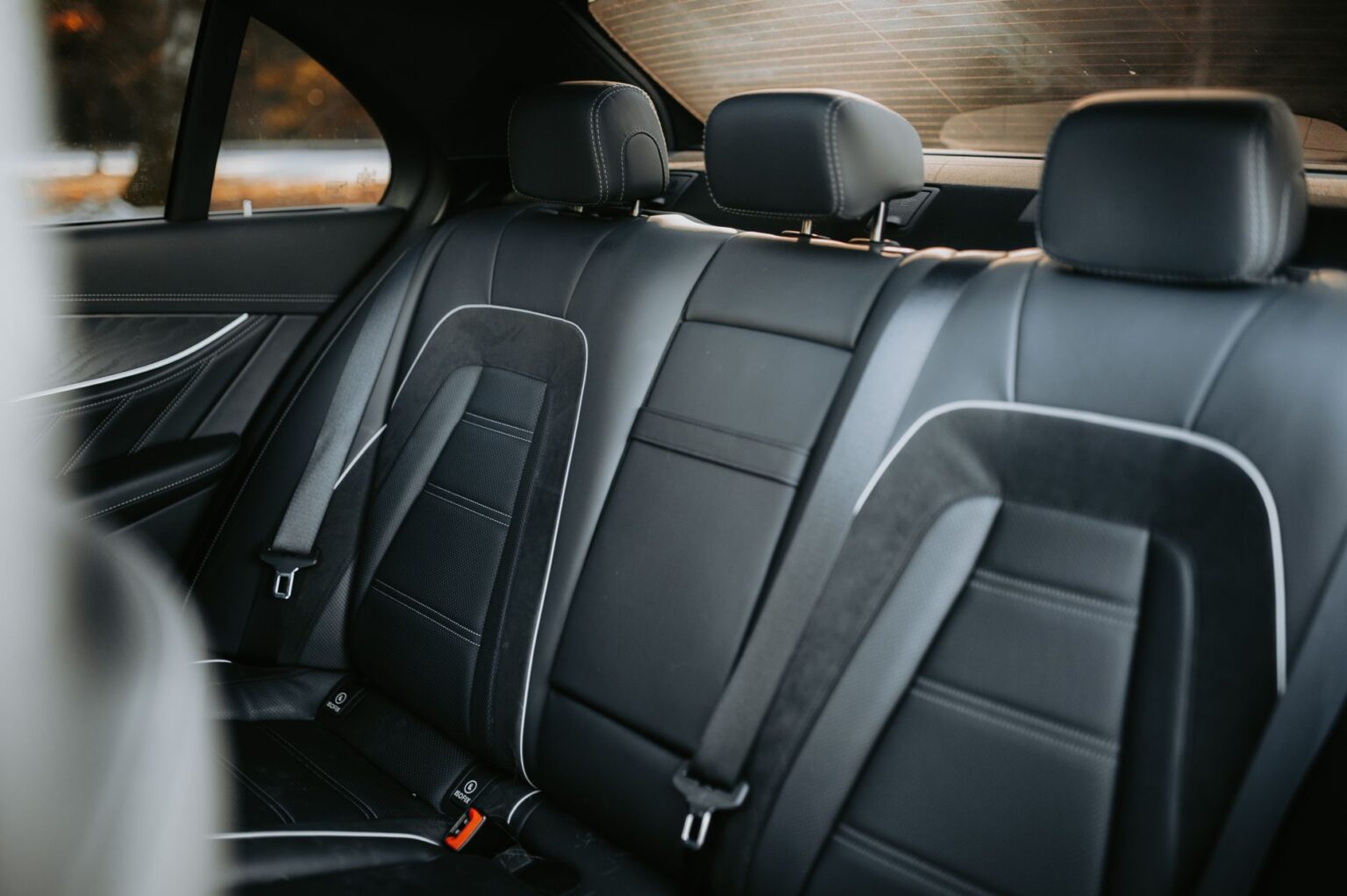
Tesla’s rear seats look roomy, but car-seat fit comes down to the LATCH hardware layout and the shape of the seatback, not overall cabin size. The Insurance Institute for Highway Safety rates LATCH ease of use on both the 2026 Model Y and the 2026 Model 3 as “Acceptable” — one step below the top “Good” grade. On both models, the two outboard rear seats get full lower-anchor LATCH hardware; the center seat has only a top tether, not lower anchors.
That matters for how you shop. Here’s what’s actually been tested, and which seats make three-across possible if you need it.
What a real installation test found
Cars.com’s Car Seat Check, done by certified child-passenger-safety technicians on a 2025 Model 3, installed an infant seat (Chicco KeyFit 30), a convertible (Graco Contender 65), and a booster (Graco TurboBooster) in the second row. The infant seat and the convertible installed rear-facing both earned an A grade — lower anchors sit about an inch into the seat crease but were still easy to reach. The same convertible installed forward-facing dropped to a B, because the Model 3’s fixed rear head restraints push the seat away from the seatback. The booster scored a C for the same head-restraint issue, plus buckles that sit flush in the seat crease and can get covered by the booster base.
Cars.com also confirmed the lower anchors have a combined 65-pound limit that includes both the child and the seat’s own weight — worth checking against your seat’s spec sheet before you assume LATCH is an option at a given age.
When the technicians tried all three seats at once, the Model 3 did not fit three car seats across comfortably. That lines up with the IIHS’s center-seat finding: with no lower anchors in the middle position, a third seat there has to go in with the seat belt, not LATCH.
If you need three seats across
Width is the deciding factor, and a difference of half an inch matters. The Clek Fllo, one of the narrower convertible seats sold in the US, measures 16.9 inches wide, rear-faces from 14 to 50 pounds, and forward-faces from 26.5 to 65 pounds; Clek’s own site lists it at $499.99. The Graco SlimFit3 LX is marketed specifically as “Ultra-Slim, Fits 3-Across” and comes in narrower still, which is why it shows up often in three-across roundups at a lower price point than the Fllo.
Neither seat’s width spec is a guarantee on its own. A seat that measures 17 inches on paper can push wider once it’s actually buckled in and reclined, and buckle stalks, cupholders, and door armrests all eat into the space a spec sheet doesn’t account for. Bring your actual seats (or borrow a floor model) and test-fit them in your Tesla before you buy, especially if you’re mixing a rear-facing infant seat with two others.
The practical version
For most buyers with one or two kids, the outboard LATCH positions in a Model 3 or Model Y handle a standard convertible or infant seat without drama. It’s the third, center-seat install, or a tight three-across squeeze, where the seat you pick starts to matter. If LATCH in a given position feels awkward, the seat belt method is a normal, fully supported alternative — not a downgrade. Whatever you buy, check it against your Tesla’s owner’s manual and your car seat’s own instructions; anchor locations and weight limits are the two numbers worth confirming before the seat is installed, not after.
Photo by Luke Miller via Pexels.
Photo by Luke Miller.