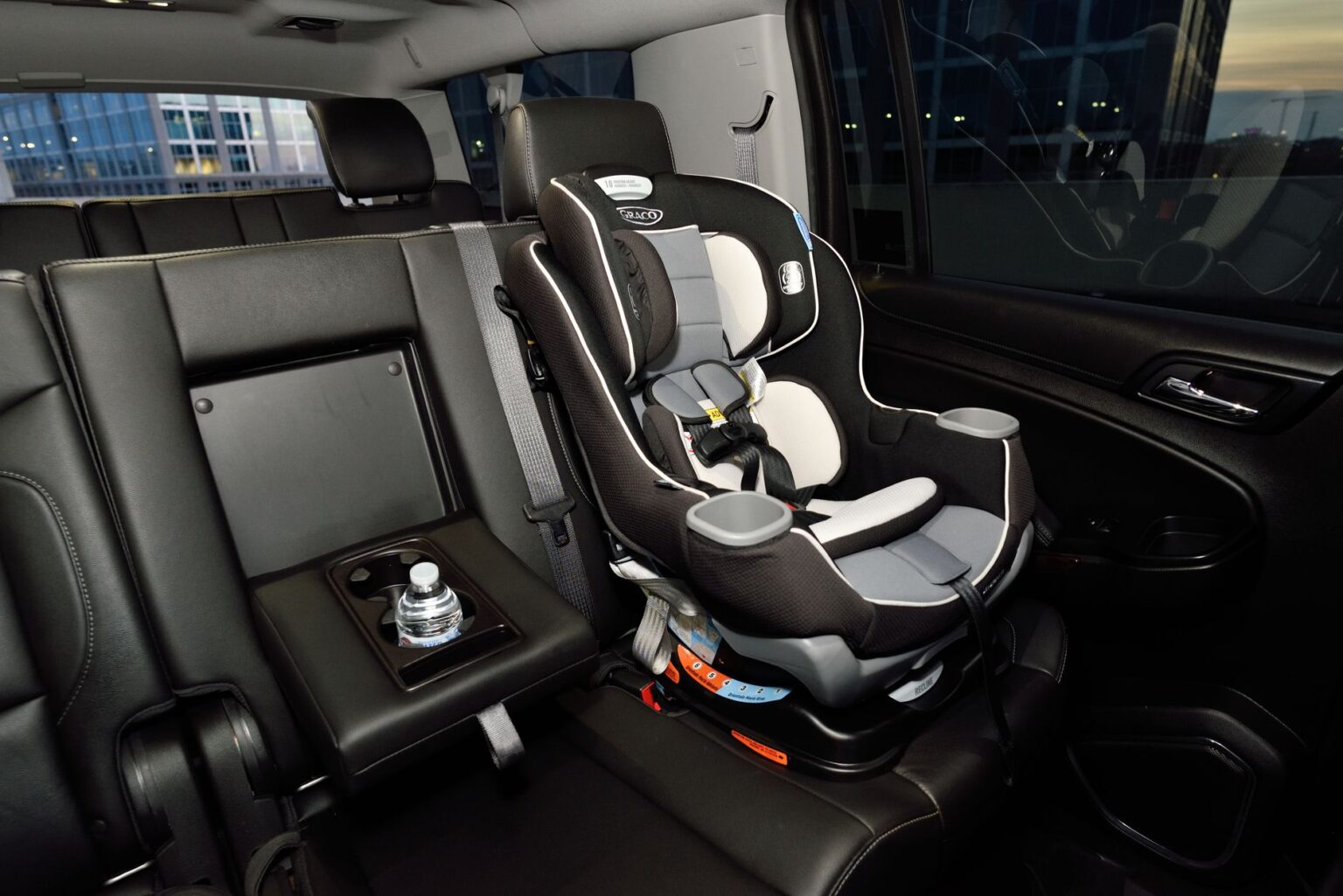
Where the LATCH anchors are in your Tesla, and how to install a car seat correctly.
Every current Tesla — Model 3, Model Y, Model S, and Model X — uses the same basic LATCH layout: lower anchors live in the outboard second-row seats, and the center rear seat is seat-belt-only. Model X breaks the pattern in one useful way, so it’s worth checking your specific model before you buy a seat or install one.
According to Tesla’s Model 3 owner’s manual, lower LATCH anchors sit between the seat’s backrest and cushion in the two outboard second-row seats, each marked with a small identification button on the seat back. The center rear seat has no LATCH anchors — Tesla’s manual is explicit: “use only a seat belt retained seat in the center position.” Model Y’s manual describes the identical setup, and confirms Model Y’s optional third row has no LATCH anchors at all — a seat back there rides on the seat belt alone.
Model X is the exception. Its second row supports LATCH in the outboard positions (both seats, if your car has the two-seat monopost configuration), and if the car has a third row, those outboard seats get LATCH anchors too. Model S’s manual matches the Model 3/Model Y pattern — outboard rear seats only, center seat-belt-only, and front-seat installation prohibited outright.
Every model shares the same weight ceiling: once the combined weight of the child and the seat passes 65 lbs (29.5 kg), Tesla’s manuals say to stop using the lower LATCH anchors and switch to the seat belt with the top tether strap instead. That threshold usually gets hit by a forward-facing toddler seat well before a child actually outgrows it, so don’t assume LATCH is fine just because the seat still physically fits.
Top tether anchors are separate from the lower LATCH bars and get used on every forward-facing install, LATCH or seat belt. They sit on the shelf behind the rear seats (or, on Model X, on the back of the second- and third-row seats), and Tesla notes the anchor point “may not be readily visible” — look for a small slit in the seat material rather than a visible bracket. Route a single-strap tether over the outside of the head support in an outboard seat, or over the center of the head support in the middle seat; dual-strap tethers go one strap on each side.
One rule applies across every Tesla: never clip two child seats to the same lower anchor point. Tesla’s manual warns that a single anchor may not hold up in a crash if it’s asked to secure two seats at once. If your seat supports both LATCH and seat belt installation, check its own manufacturer instructions — Tesla’s guidance covers where the anchors are, not which method is right for your particular seat.
Photo by Lee Salem.