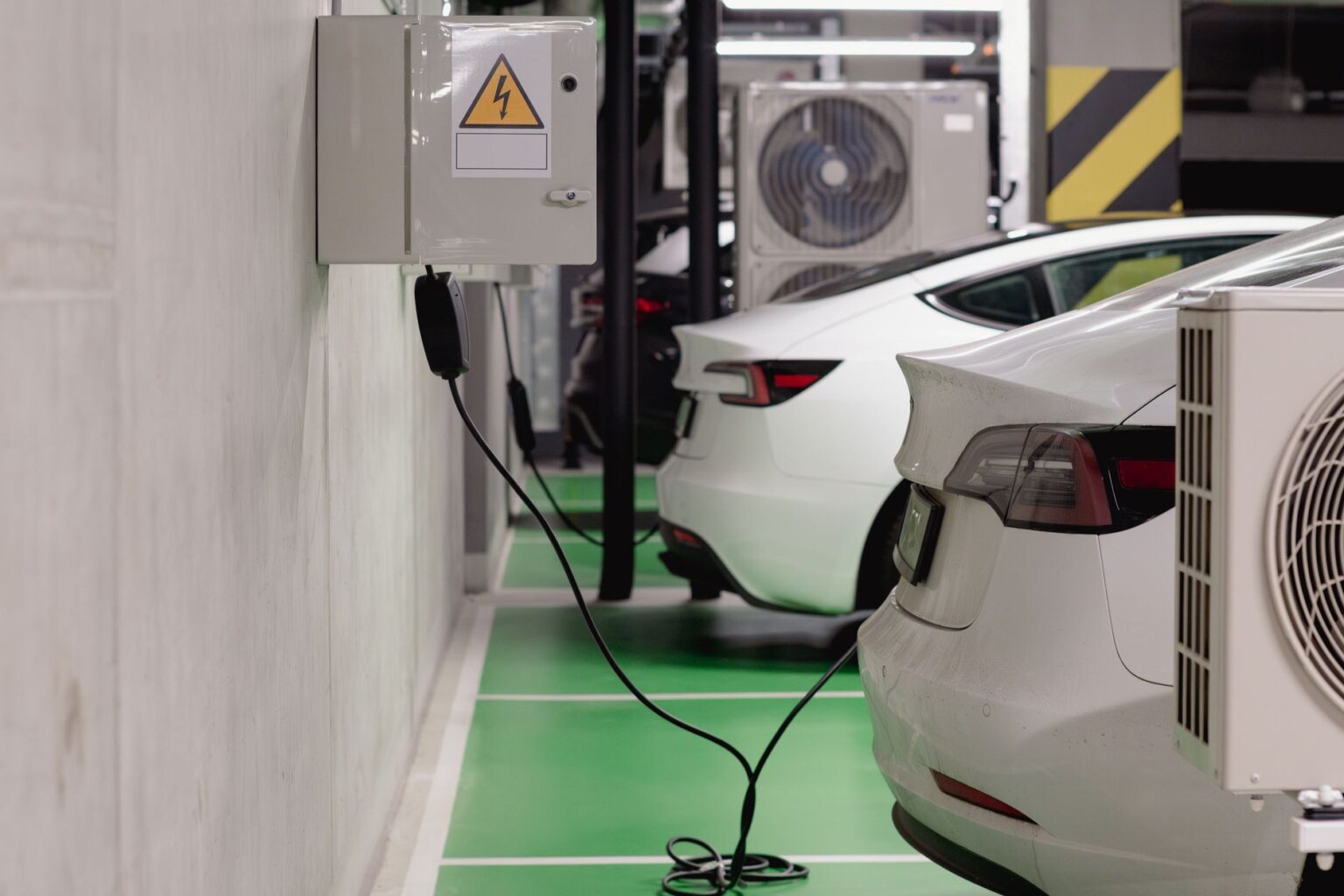
Not having a driveway or garage doesn’t rule out owning a Tesla, but it changes how you plan your charging. Here’s what actually works if you park on the street, in a shared lot, or in an apartment or condo garage.
Start by checking what your building already offers. Many apartment and condo communities already have EV charging installed in shared or assigned parking spaces, often through an agreement with the property manager or HOA. If yours doesn’t, ask about adding a shared Level 2 station — a building-installed charger is often the simplest long-term fix, since you charge overnight without leaving the property.
If your building has no charging and no plan to add it, look at the outlet you do have access to. A standard 120V household outlet (Level 1) works with the mobile connector that comes with every Tesla, though it only adds a few miles of range per hour — enough to keep up with light daily driving, not enough to fill an empty battery overnight.
Public Level 2 charging fills the gap for most apartment dwellers. It adds up to 37 miles of range per hour, which is plenty if you plug in while at work, shopping, or out for dinner. The Tesla app and in-car map show nearby stations, both Tesla and third-party.
Superchargers cover everything else: road trips and the days you need a fast top-up with no other option. They add range far faster than Level 2, but cost more per mile than home charging, so they work best as a backup rather than an everyday routine.
A workable routine for most renters combines two of these: a public Level 2 charger near work or a regular errand stop, plus occasional Supercharger visits when you’re running low. Before you commit to a Tesla without home charging, map out where you’d actually plug in on a normal week — a charger a five-minute walk from your building beats a great deal on paper if it turns charging into a chore.
Photo by Jakub Zerdzicki.