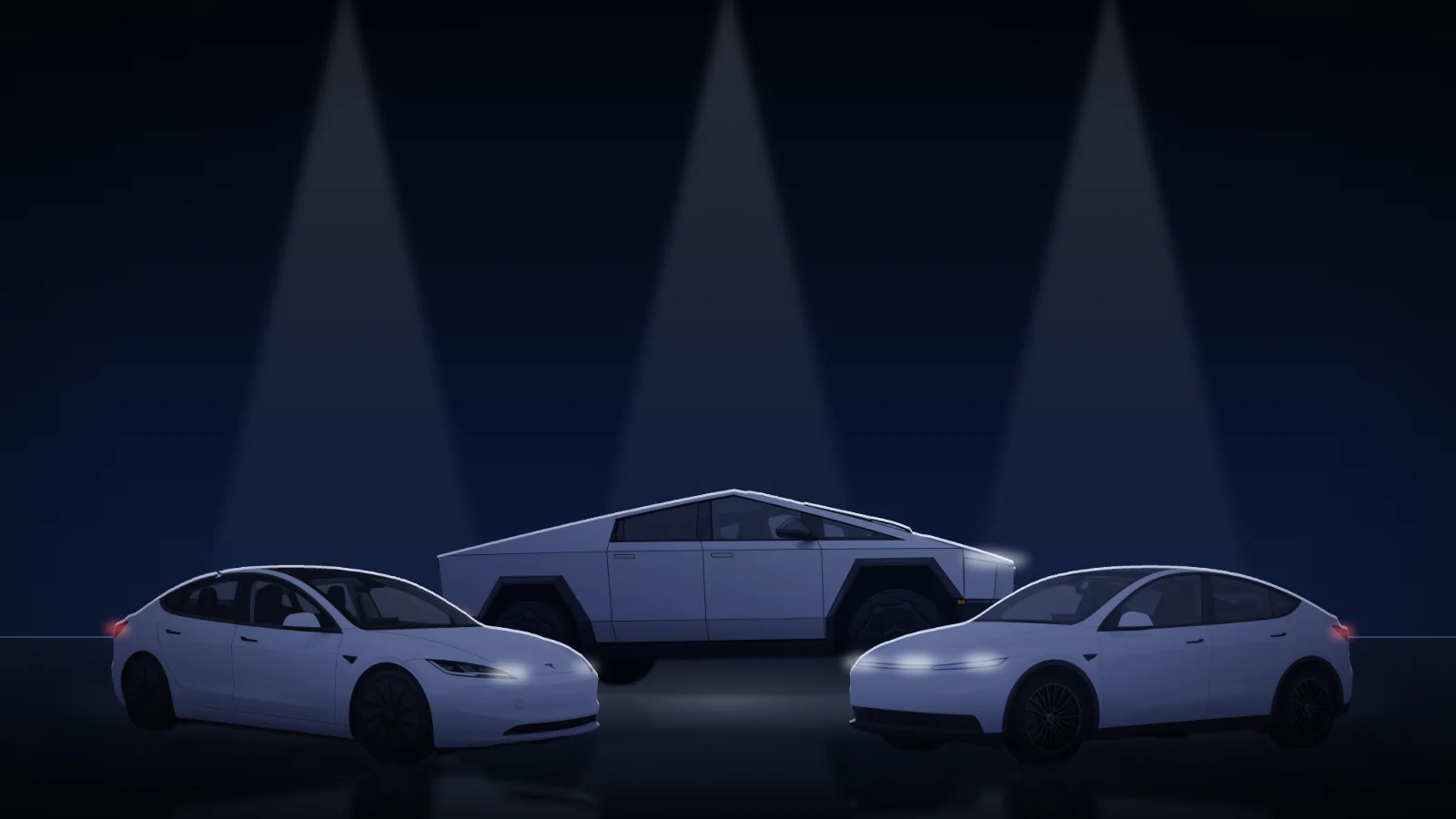
Tesla builds two SUVs, and it is easy to assume they are just different sizes of the same thing. They are not. The Model Y starts at $39,990 before destination and order fees, while the Model X starts at $99,990 for the all-wheel-drive base trim and climbs to $114,990 for the Plaid version. That price gap alone tells you these two vehicles are aimed at different buyers, but the seating, cargo, and range differences matter just as much.
Seating: an add-on third row vs. falcon-wing doors
The Model Y comes standard with five seats. If you regularly carry six or seven people, Tesla sells a stretched Model Y L with six seats arranged in a 2+2+2 layout, with independent captain’s chairs in the second row, priced at $61,990 for the Launch Series trim and rated for 325 miles of EPA range.
The Model X also seats five people standard, but Tesla offers a six-seat layout with second-row captain’s chairs for $6,500, or a seven-seat configuration that actually costs about $3,000 less than the six-seat option. The Model X is also the only Tesla SUV with the distinctive rear falcon-wing doors, which hinge at the roof and open upward — useful in tight parking spots where a normal door can’t swing open.
Cargo space
With all seats in place, the Model Y holds 33.1 cubic feet behind the second row, expanding to about 76 cubic feet with the rear seats folded flat. The Model X carries 43.5 cubic feet with all seats up, plus a 6.5-cubic-foot front trunk. Folding the Model X’s third row frees up meaningfully more room, while filling all three rows leaves it with the tightest cargo space of the two SUVs.
Range
The base rear-wheel-drive Model Y is EPA-rated for up to 321 miles on its standard 18-inch wheels, and the Premium RWD trim reaches up to 357 miles. The base Model X is EPA-rated for 352 miles, while the Plaid trades some range for performance at 335 miles. As of August 2026, these are manufacturer-published estimates; real-world range depends on wheel size, weather, and driving style, as it does with any EV.
Towing
If you plan to tow, the gap widens further. Tesla’s own owner’s manual lists the Model X’s maximum towing capacity at 5,000 pounds with the standard 20-inch wheels, compared with 3,500 pounds for a five-seat Model Y. That 1,500-pound difference matters if you’re pulling a boat, a larger trailer, or anything near the upper end of what a small camper weighs.
Who should buy which
The Model Y makes sense for most buyers. It costs less than half as much as the Model X, carries almost as much cargo with the seats folded, and covers more everyday range on its cheapest trim. The Model Y L closes most of the third-row seating gap for families who occasionally need six seats, without approaching Model X money.
The Model X earns its price for a narrower group: buyers who want the extra towing capacity, the flexibility of a genuine seven-seat configuration, the falcon-wing doors for tight garages or parking, or the extra cargo room with all seats in use. If none of that applies to you, the Model Y is very likely the better $60,000 you’ll never spend.