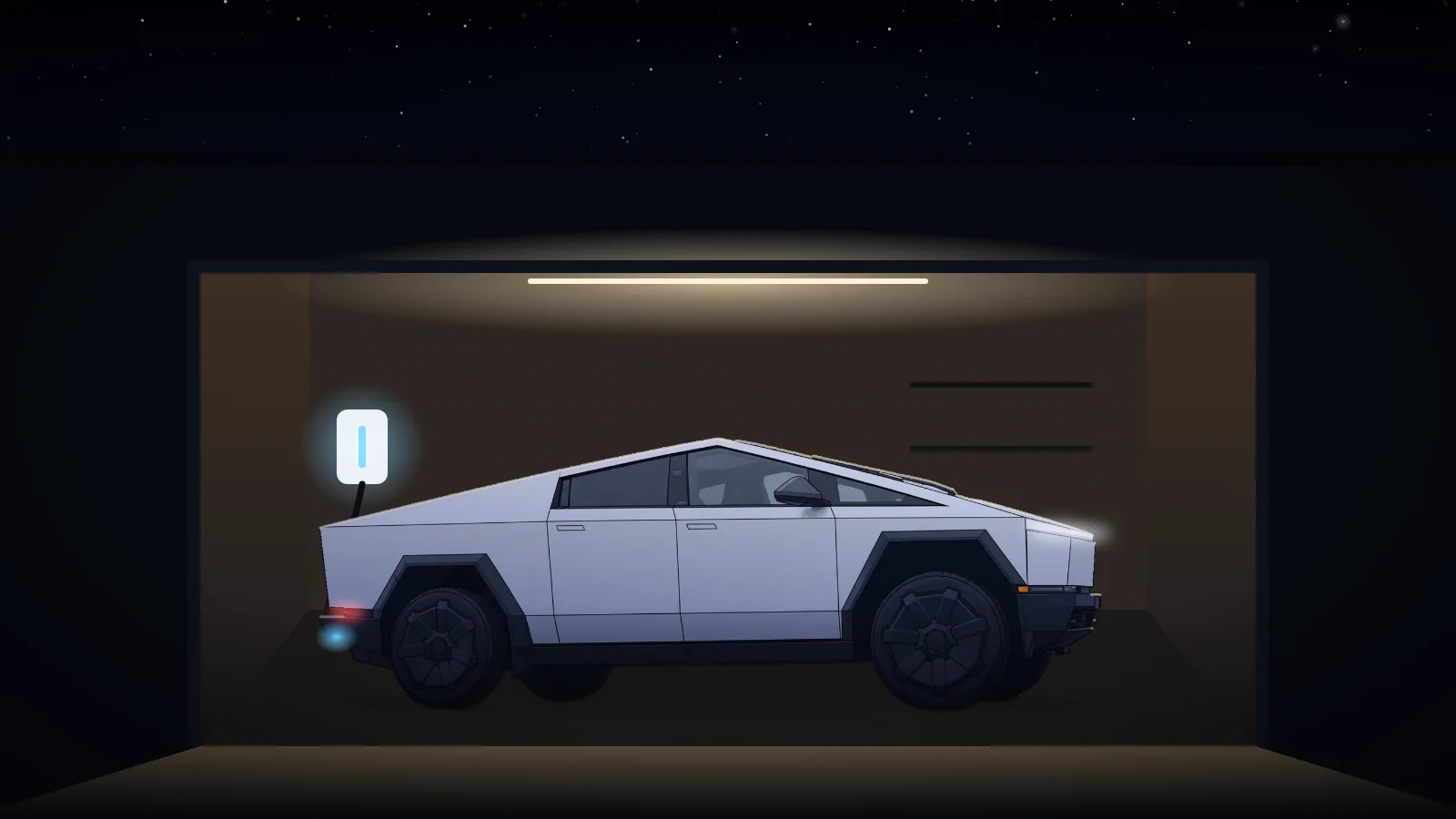
Lift your foot off the accelerator in a Tesla and the car starts slowing down on its own, well before you touch the brake pedal. That’s regenerative braking, and with the right setting turned on, it lets you drive using only the accelerator pedal for almost every stop.
How regenerative braking works
Whenever the car is moving and your foot is off the accelerator, the electric motor reverses its role and acts as a generator, creating resistance that slows the car while converting kinetic energy that would otherwise be lost as heat back into electrical energy, per Tesla’s owner’s manual. That energy goes straight back into the battery, which is why regen braking adds real range on a drive with a lot of stop-and-go traffic or downhill sections, not just a smoother feel. Regenerative braking can also reduce wear on your physical brakes, since the motor is doing more of the slowing work than the brake pads.
The three Stopping Mode settings
Tesla lets you choose what happens as you approach a full stop, in Controls > Driving (or Pedals & Steering, depending on your software version) > Stopping Mode. Hold blends in the physical brakes automatically once you’re below about 4 mph, bringing the car to a complete, held stop with no brake pedal input — this is what most people mean by “one-pedal driving.” Creep behaves like a traditional automatic transmission, letting the car roll forward slowly once you release the accelerator near a stop. Roll lets the car coast rather than creep or hold, closer to a manual transmission in neutral.
When it won’t slow you down as much
Regenerative braking isn’t available in every condition. It’s reduced or unavailable when the battery is very cold, since a cold battery can’t accept charge as fast, and it’s also limited when the battery is already at or near a full charge, since there’s nowhere for the reclaimed energy to go. In both cases, the car leans more on the physical brakes to make up the difference, and you’ll notice the pedal feel less aggressive than usual. Towing also reduces how much regen braking can do, since a heavier load takes more distance to slow down regardless of how the motor is working.
Should you drive in Hold?
Most owners settle into Hold within their first week and rarely switch back, since it’s the closest thing to true one-pedal driving and it maximizes how much energy you recapture. If you’re new to it, practice in an empty parking lot first — lifting off the accelerator decelerates the car noticeably harder than a gas car coasting, and it takes a few drives to build a feel for exactly how much distance you need before a stop sign or red light.