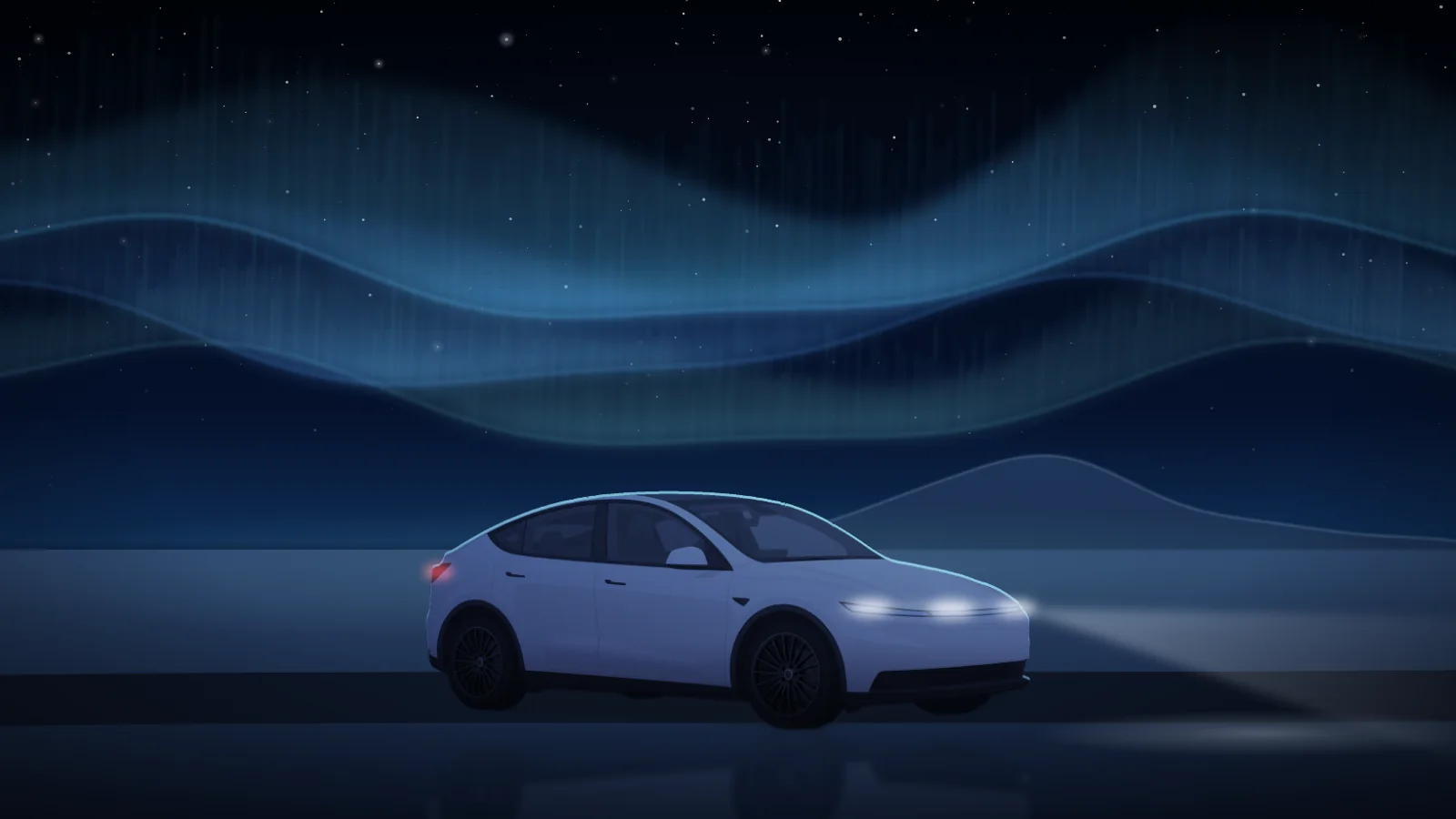
The Model Y L’s glass roof runs the full length of the cabin over both rows of seats, and Tesla’s own documentation says it blocks the large majority of harmful UV exposure — but it isn’t a substitute for shade on a hot day.
What Tesla actually says about UV protection
Tesla’s owner’s manuals state that the roof, windshield, and windows are “excellent at protecting you from UV (ultraviolet) rays,” with the glass scoring less than 2 on the UV Index scale — the same language Tesla uses across the Model Y, Model 3, and Cybertruck manuals. That’s a real, measurable claim about UV, which is the radiation linked to sunburn and long-term skin damage, and it applies whether you’re sitting under the glass roof or behind the windshield.
What it doesn’t promise
UV protection isn’t the same as heat control. Tesla’s manuals don’t publish a specific infrared or heat-rejection percentage for the glass roof, and a large glass panel over both rows means more direct sunlight reaching the cabin than a car with a solid roof, especially when the car sits parked in the sun. If you park outside often in hot weather, the practical fix most owners land on is a sunshade for the parked car and using the climate system’s scheduled or remote pre-cooling before you get in, rather than relying on the glass alone to keep the cabin cool.
Seeing it in the car
Tesla posted this look at the Model Y L’s glass roof on July 29, 2026:
It’s a short promotional clip meant to show the size and feel of the roof from inside the cabin, not an independent test of heat or UV performance — for the actual protection claims, Tesla’s owner’s manual above is the source to check.