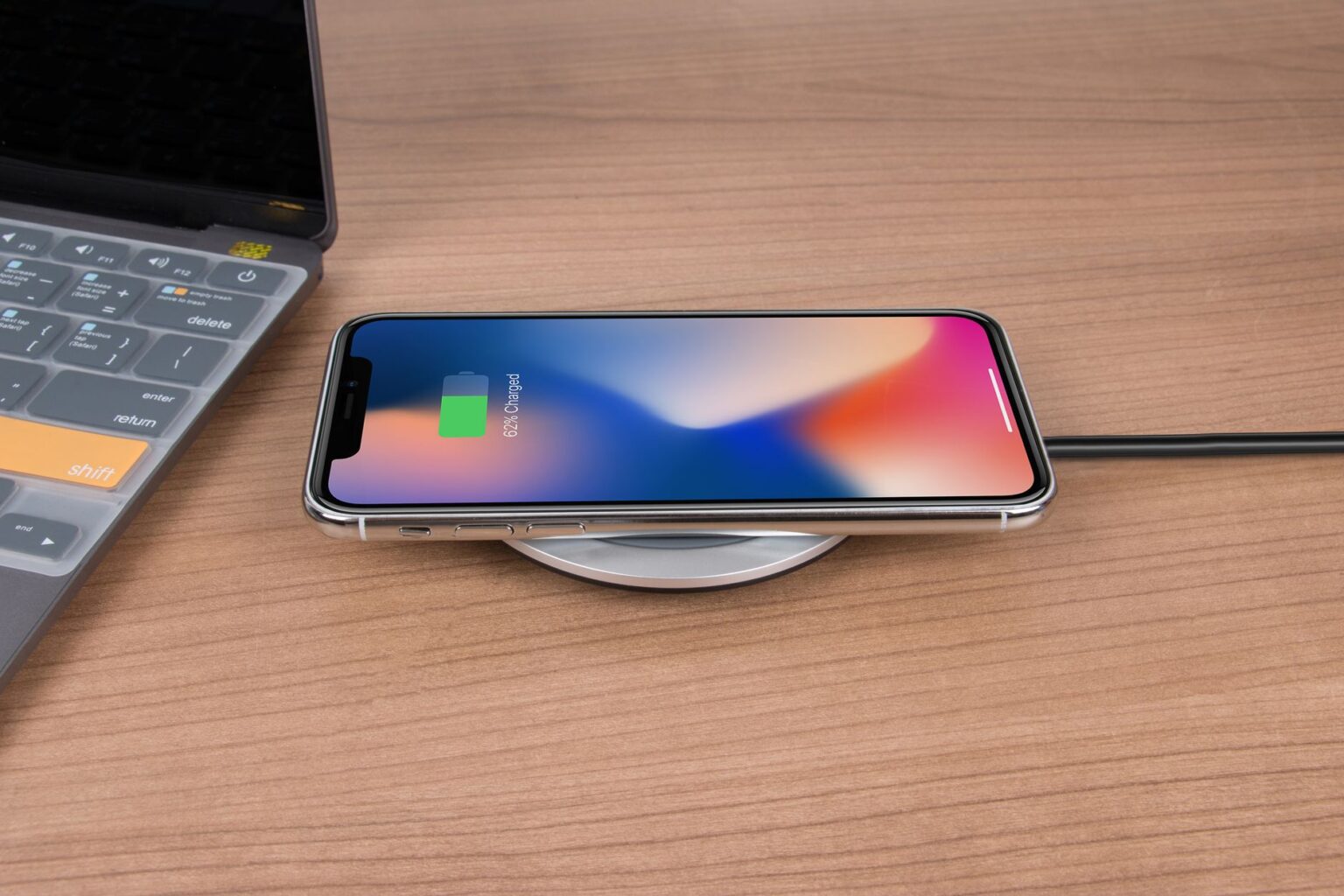
Before you add a wireless phone charger to your Tesla accessories list, check whether your car already has one built in — for a lot of buyers, it does.
Current Model 3 and Model Y both ship with a factory wireless charging pad in the center console. Tesla’s owner’s manual lists it as delivering up to 15W of power across two charging spots, enough to keep a Qi-enabled phone topped up on a normal drive. If your car has this pad, an aftermarket charger doesn’t add charging capability — it might only be worth it for a different mounting angle or a case that doesn’t sit flush on the factory pad.
The catch is that not every Tesla has it. The 15W dual pad arrived with the redesigned Model 3 (Highland, starting late 2023) and Model Y (Juniper, starting 2025). Older Model 3 and Model Y builds, along with Model S and Model X, don’t have a factory pad in the same spot. For those cars, Tesla sells its own wireless charging dock as an accessory, which the company’s support page lists as providing up to 5W of power per phone across two docks — noticeably slower than the built-in pad on newer cars, but a straightforward, known-fit option if you don’t have one already.
Whichever charger you’re using, the same rules apply: thin, non-metallic phone cases work best, and you should remove coins, keys, and any NFC cards — including your Tesla key card — before charging, since metal near the pad can cause damage or interfere with the charge.
The short version: check your build date and console before you buy anything. If you already have the built-in pad, save your money for something else on the accessories list. If you don’t, Tesla’s own dock is a known-compatible option, though it’s worth weighing against your case and how many devices you actually need to charge at once.
Photo by Rann Vijay.