What Tesla’s tire pressure sensors actually monitor, and when one needs replacing.
A tire pressure warning on your Tesla’s touchscreen usually means exactly what it says — but sometimes it means the sensor itself, not the tire, needs attention. Here’s how the system actually works, and what a replacement costs.
How Tesla’s TPMS works
Each wheel carries a small, battery-powered sensor that measures live pressure and temperature and transmits it to the car, according to a TPMS troubleshooting guide from Tesla accessory retailer Tesery. When pressure actually drops, the touchscreen shows an orange tire icon; if a sensor stops communicating altogether, you’ll see a “Sensor Fault” message instead of a pressure reading — a different problem with a different fix.
Tesla has used two sensor types over the years: an RF sensor operating at 433 MHz, and a Bluetooth (BLE) sensor used on newer vehicles. The two aren’t interchangeable, so buying the wrong type for your model year simply won’t pair, per the same guide.
Why a sensor eventually fails
TPMS sensors run on a sealed, non-rechargeable battery. Tesery’s guide puts the typical service life at 5 to 7 years, depending on driving conditions and temperature extremes — when the battery depletes, the sensor goes silent rather than gradually weakening, so the fault can seem to appear out of nowhere.
What replacement actually costs
At a Tesla Service Center, a full set of four sensors runs roughly $280 to $380 for Model 3 and Model Y, and somewhat more for Model S and Model X, according to Tesery. Independent tire shops typically charge less for the same part: about $45 to $75 for a single sensor including installation and programming, or $140 to $240 for all four.
A sensor fault doesn’t necessarily mean a tire is losing air, and it isn’t something you did wrong. If your Tesla is a few years old and a sensor goes quiet, it’s usually just the battery reaching the end of its service life — the same way a key fob eventually needs a new one. Check the actual pressure readings on the touchscreen or in the Tesla app before assuming the worst; if all four wheels show plausible numbers except one that’s gone blank, that’s your sensor, not your tire.
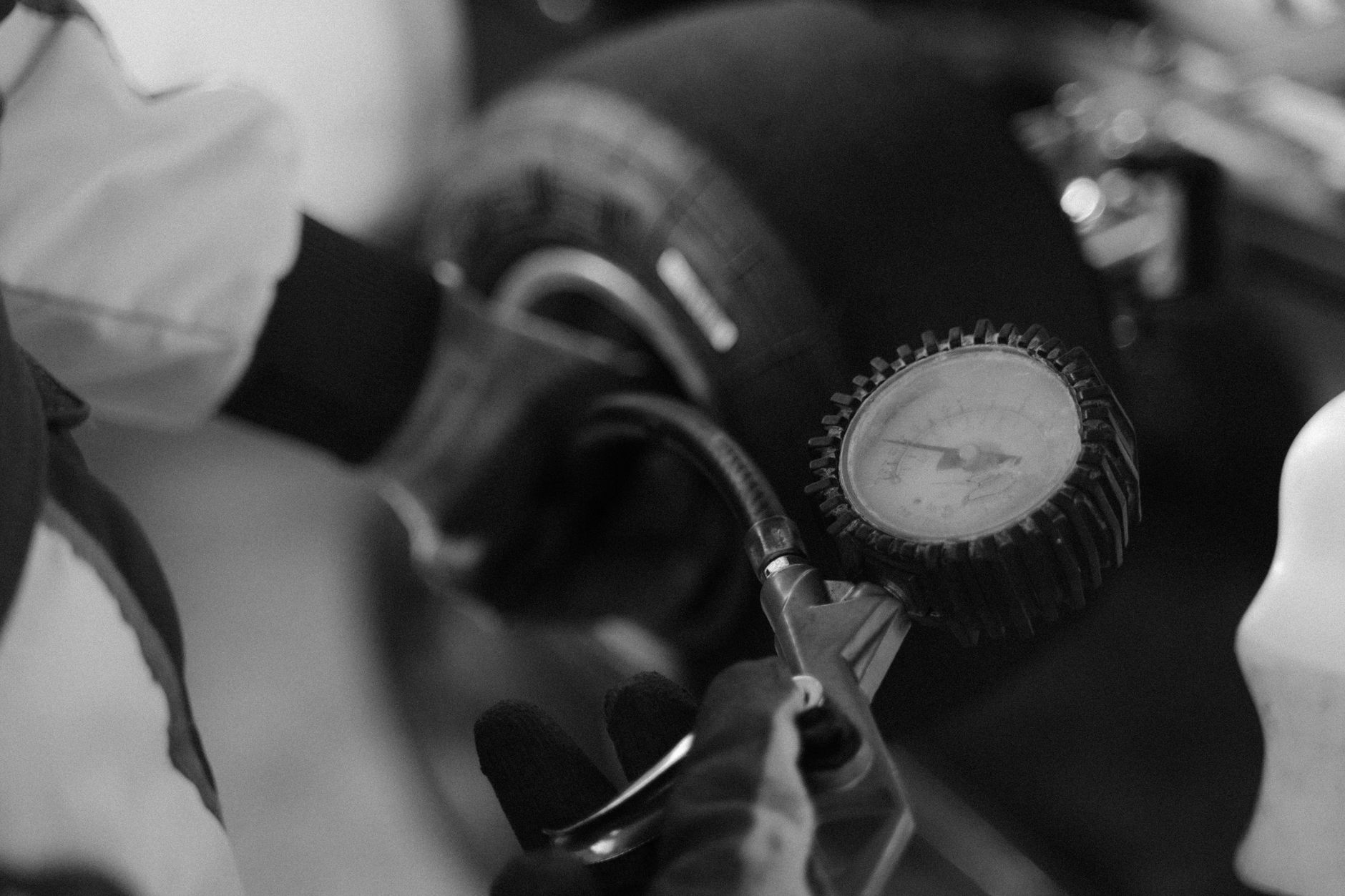
Photo by Tima Miroshnichenko.