People planning a Tesla purchase often hear a single number for “cost per mile” and assume it applies everywhere. It doesn’t. Home charging cost is mostly a function of your local electricity rate, and according to the U.S. Energy Information Administration’s most recent data (April 2026), average residential electricity prices range from about 14 cents per kWh in Washington state to over 35 cents per kWh in California — a difference of more than 2.4x.
The math
Cost per mile is your car’s electricity use (in kWh per mile) multiplied by your electricity rate (in dollars per kWh). Per EPA testing, a 2026 Model 3 Premium AWD uses about 0.26 kWh per mile, and a 2026 Model Y Long Range AWD uses about 0.27 kWh per mile. Multiply that by your rate and you get real numbers:
Cost to drive 100 miles in a Model Y Long Range AWD (0.27 kWh/mile), by state electricity rate (EIA, April 2026):
- Washington (14.36¢/kWh): $3.88
- Georgia (15.37¢/kWh): $4.15
- Florida (15.38¢/kWh): $4.15
- Arizona (15.48¢/kWh): $4.18
- Texas (16.99¢/kWh): $4.59
- Ohio (19.49¢/kWh): $5.26
- Illinois (20.47¢/kWh): $5.53
- Michigan (21.39¢/kWh): $5.78
- New York (29.45¢/kWh): $7.95
- California (35.25¢/kWh): $9.52
That’s the same car, the same driving, and more than double the fuel cost depending only on where you plug in. Even at the California end of that range, it’s still generally cheaper than filling a comparable gas car at national average gas prices — but the gap is much smaller in high-electricity-cost states than the “pennies per mile” claims you’ll see in Tesla marketing, which are usually calculated at the national average rate.
Your rate may not be the state average
These are statewide averages, and utilities within a state can vary widely — a municipal utility in one city can charge meaningfully less than an investor-owned utility one county over. Many utilities also offer time-of-use plans with a cheap overnight rate specifically aimed at EV owners, which can bring your real cost well below the flat average shown above if you schedule charging overnight. The most accurate number is always your own utility bill’s per-kWh rate, not a national or state average — use the table above as a starting point, then check your bill or your utility’s EV charging plan to see what you’re actually paying.
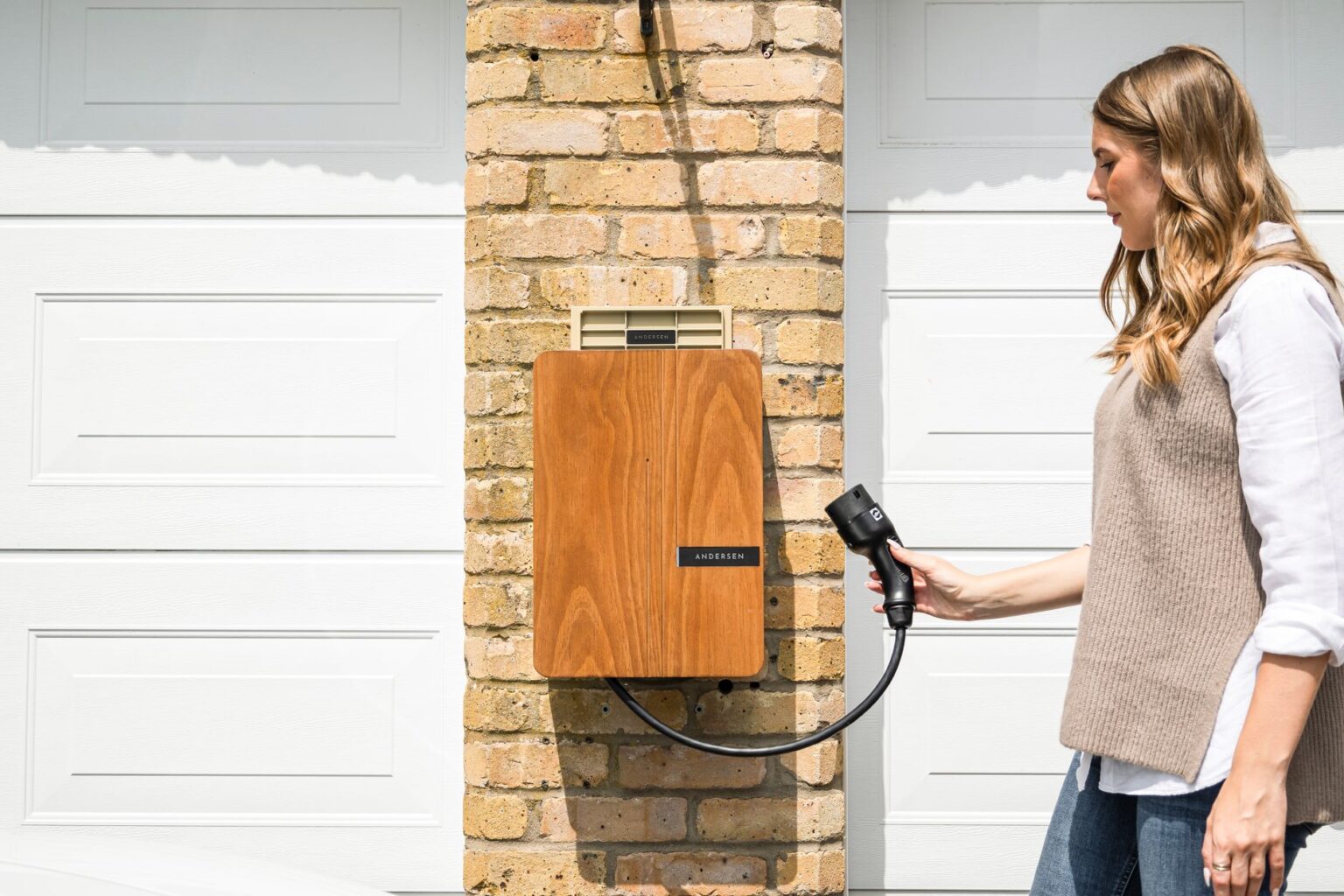
Photo by Andersen EV.