The Future of Intelligence: Key Takeaways from Elon Musk’s Vision for AI and Robotics
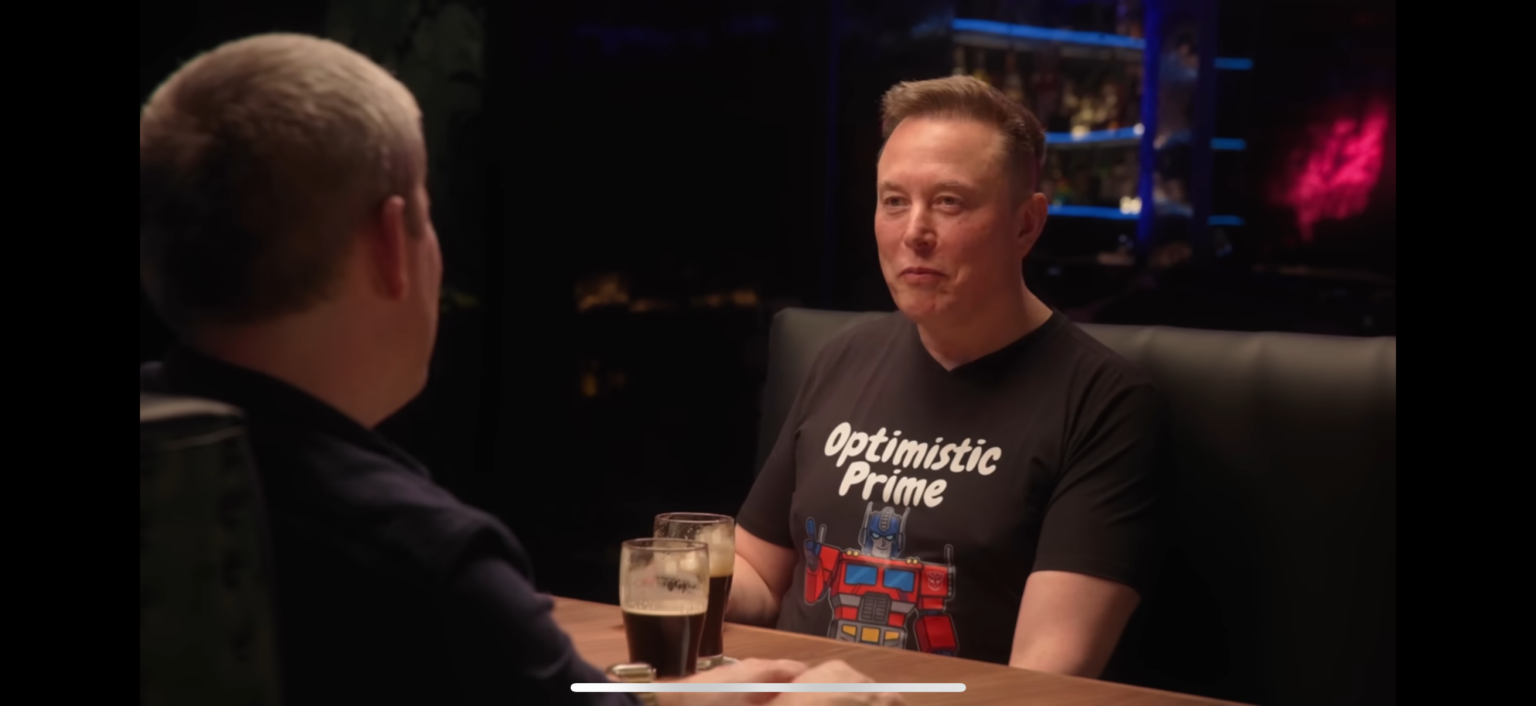
In a wide-ranging interview with Dwarkesh Patel, Elon Musk detailed a future defined by a “maniacal sense of urgency.” From moving AI compute into space to the recursive exponential growth of humanoid robots, Musk’s roadmap focuses on identifying and crushing the “limiting factors” of human progress.
1. Space-Based AI: Solving the Earthly Power Crisis
One of the most provocative predictions Musk made is that within 36 months, space will become the most economically compelling location for AI data centers. The reasoning is rooted in physics and resource availability:
- The Electricity Bottleneck: While chip production is growing exponentially, Earth’s power grid is relatively stagnant. Space offers an untapped frontier for energy.
- Solar Efficiency: Without an atmosphere, day/night cycles, or weather interference, solar panels in space are roughly five times more effective than those on the ground.
- Battery-Free Operations: By operating in constant sunlight, space-based AI avoids the massive infrastructure costs of the batteries required to power Earth-based centers at night.
2. Optimus and the “Infinite Money Glitch”
Musk views the Tesla Optimus humanoid robot not just as a tool, but as a fundamental shift in the global economy. He refers to it as an “infinite money glitch” because of its ability to eventually manufacture more versions of itself.
This growth is driven by three “recursive exponentials”:
- Digital intelligence.
- Chip capability.
- Electromechanical dexterity.
Tesla has transitioned to a “physics first” approach, even designing custom actuators in-house to achieve human-level hand dexterity. The ultimate goal is mass production reaching one million units per year by Optimus Version 3.
3. Scaling Beyond Limits: The “Terapab” Initiative
To support the massive compute requirements of the next decade, Musk introduced the concept of Terapab—a massive manufacturing initiative designed to bypass current supply chain backlogs. He anticipates that SpaceX and Tesla may eventually need to build their own dedicated “fabs” to produce millions of wafers for logic and memory chips every month.
4. xAI: Understanding the Universe Through Truth
The mission of xAI and its flagship model, Grok, is defined simply: “understanding the universe.” Musk argues that for an AI to be safe and useful, it must be rigorously truth-seeking.
He warns against the dangers of “politically correct” AI, citing 2001: A Space Odyssey to illustrate how forcing an AI to lie can lead to a breakdown in its logic. By focusing on understanding the universe, Musk believes AI will naturally find humanity interesting and seek to preserve human consciousness.
5. “Pico-Management” and the Art of the Pivot
Musk described his leadership style as “pico-management.” Rather than managing every detail, he drills down into specific, minute problems only when they represent the primary limiting factor for the entire company. A prime example of this was the pivot from carbon fiber to stainless steel for Starship—a decision made to increase the speed of development and improve material performance at cryogenic temperatures.
Watch the Full Interview
For more insights on management philosophy, hiring for “goodness of heart,” and the future of Starship, watch the full conversation below: