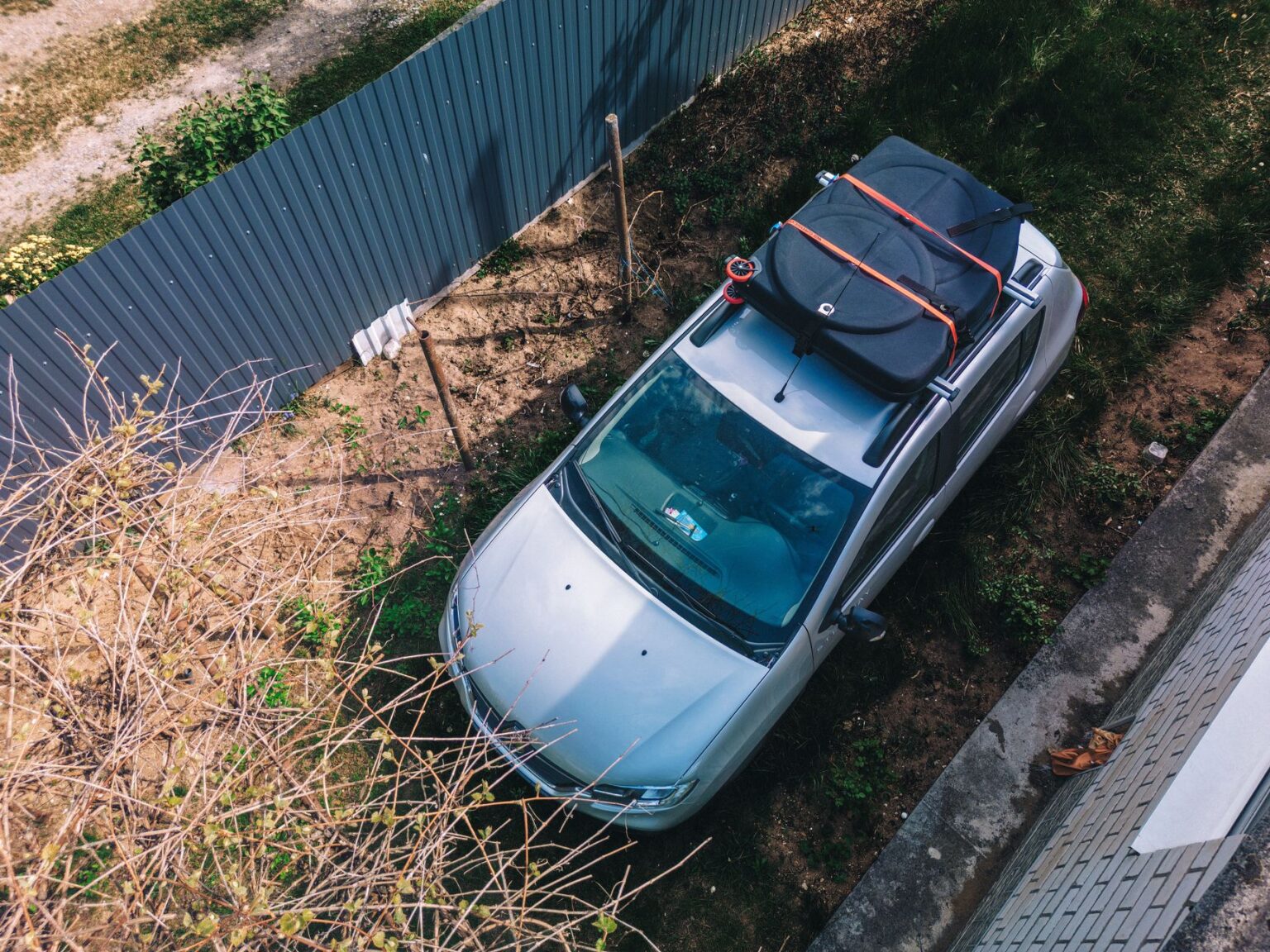
Bikes, kayaks, and rooftop cargo boxes are summer staples, but a Tesla’s roof isn’t built like a traditional car roof. Model 3 and Model Y both use a one-piece panoramic glass roof with no rain gutters or factory rails, so before you strap anything to the top of your car, it’s worth knowing what your options actually are.
Do you actually need one? If you occasionally haul a couple of soft bike bags or a small overflow bag, you may be fine using the trunk and frunk instead. But if you regularly carry bikes, skis, kayaks, or a cargo box for road trips, a roof rack is the safer and more practical choice than overloading the interior.
Why clamp-on racks are the wrong move. Because Tesla’s glass roof has no rails or gutters to grip, generic clamp-on crossbar systems that grab the door frame or roof edge aren’t a good fit. Tesla’s own owner’s manual states that Model Y “supports the use of Tesla-approved roof racks using a Tesla mounting accessory,” and warns that failing to use an approved system “can cause significant damage” to the roof. In practice, that means you want a rack designed specifically for your Tesla’s roofline, not a universal clamp-on set built for a different vehicle.
Your two real options. Tesla sells factory racks for both cars: the Model 3 Roof Rack runs $400 and is rated for a 150-lb dynamic load, with a 495-lb static load limit when the car is parked. The Model Y Roof Rack runs $500 with a 165-lb load rating. Both are listed as compatible with all trims of their respective models. The aftermarket alternative is a system built for Tesla’s bare-roof profile, like Yakima’s BaseLine system for Model 3, which is designed for cars “without factory roof rails, fix points or rain gutters” and runs around $605 as configured, with a comparable 165-lb load rating. Model Y aftermarket options are more limited since most third-party systems are built around either factory rails or dedicated fixed points that Tesla doesn’t publish for every trim.
What to check before you buy:
– Load rating. Don’t exceed the rack’s stated dynamic limit (150-165 lbs depending on model), and remember that number includes the rack itself plus whatever you mount to it — bikes, a cargo box, and cargo hardware all count toward the total.
– Model and roof compatibility. Confirm the rack is listed for your specific model and glass-roof configuration; a rack built for a different vehicle’s rails won’t transfer safely.
– Static vs. dynamic limits. The dynamic rating applies while driving; a parked car can generally hold more, but don’t treat that as a driving limit.
– Installation. Factory racks bolt into Tesla’s designed mounting points and are the simplest way to stay within the manufacturer’s warranty guidance.
For most Tesla owners who haul gear only a few times a year, a factory-fit rack sized to your actual cargo — bikes, a box, or a kayak — is the straightforward call. Skip anything marketed as a universal clamp-on fit; on a glass roof, it’s not worth the risk.
Photo by Siarhei Nester.